
The 2026 INCI Glossary: Updating Your Skincare Labels for Mandatory July Compliance
For a long time, the INCI (International Nomenclature of Cosmetic Ingredients) list has seemed like a part of product development that you could "set and forget." However, the reality is that the EU's guidelines for these ingredient names are evolving, and a significant update is on the way.
On July 31, 2026, the grace period for several major labeling changes will officially end. This is a mandatory overhaul of how we present ingredients on every box and bottle. If your skincare labels are not in line with the latest nomenclature and allergen regulations by this summer, those products will not clear customs.
New Vocabulary: Implementation of Decision (EU) 2025/1175
The EU maintains an official "Glossary of Common Ingredient Names" that defines exactly what words you must use in your ingredient list.
Starting July 30, 2026, using the updated version of this glossary is mandatory for all skincare products. The Commission has added 348 new ingredient entities, bringing the total to over 30,400 entries.
- Standardization: The update fixes errors in previous versions and replaces obsolete names with valid INCI denominations.
- The Audit: We need to scrub every label against this new list. If a botanical extract has been renamed (common with newer fermented ingredients or specialized plant derivatives) or a synthetic polymer now has a more specific standardized name, your old labels are technically non-compliant.

2. The Fragrance Allergen "Cliff" (From 24 to 81)
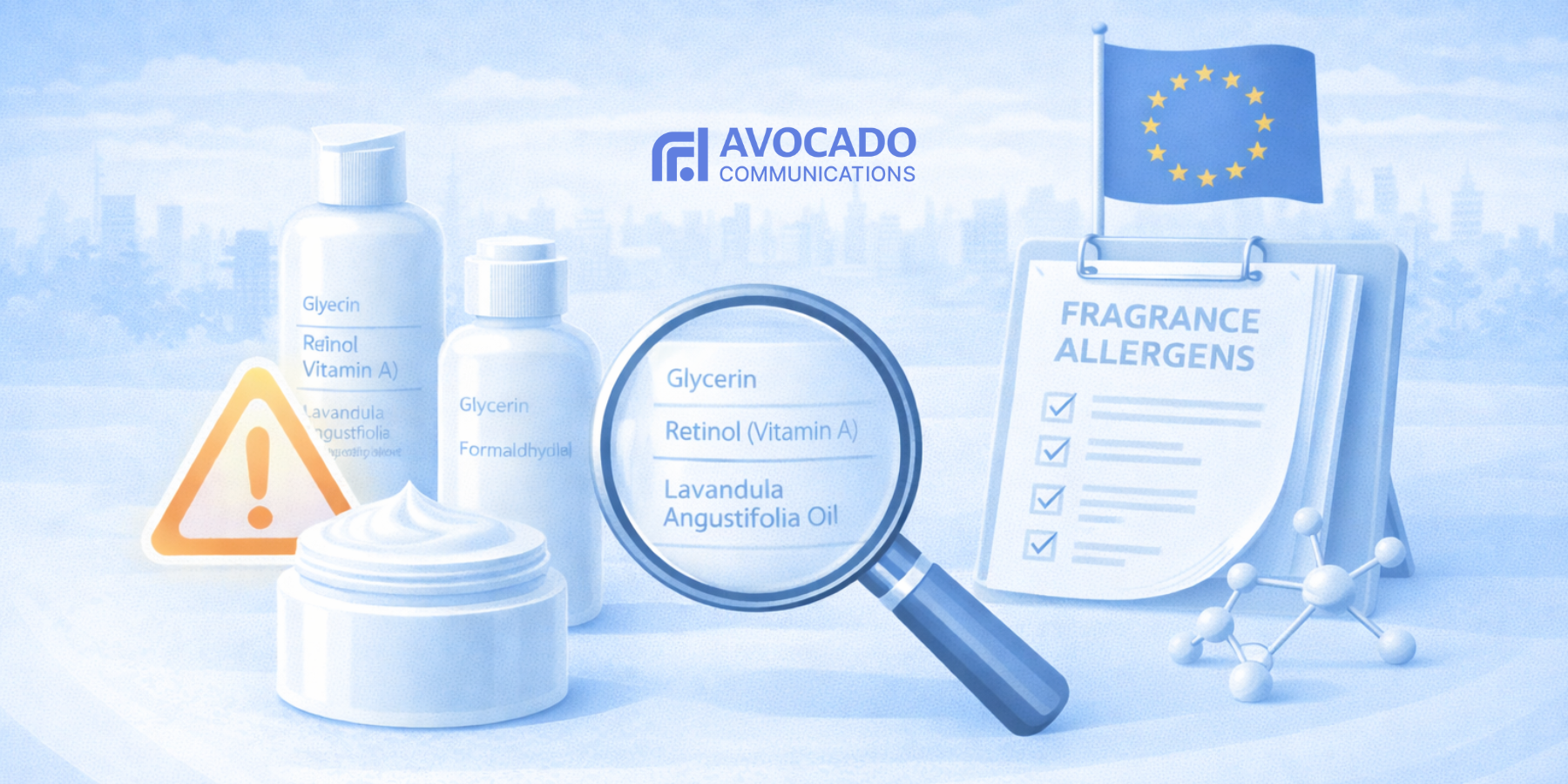
This change is arguably the most labor-intensive for skincare brands, particularly those using "natural" fragrances. Under Regulation (EU) 2023/1545, the list of fragrance allergens that must be disclosed on the label has expanded from 24 to 81.
- The Thresholds: You must list these allergens if they exceed:
- 0.001% in leave-on products (face creams, serums, body lotions).
- 0.01% in rinse-off products (cleansers, face washes).
- The "Hidden" Risk: If your "unscented" face oil uses essential oils like Lavender or Rose for their skin benefits, those natural oils contain many of these "new" allergens. You must now get a quantitative breakdown from your suppliers and list every single one that hits the threshold.
3. Bold Warnings: Vitamin A and Formaldehyde
Some "hero" skincare ingredients now require mandatory warnings that must be prominently displayed.
- Vitamin A (Retinol): Any skincare product with Retinol, Retinyl Acetate, or Retinyl Palmitate must now carry the statement: "Contains Vitamin A. Consider your daily intake before use." This is to help consumers avoid cumulative overexposure from food, supplements, and high-strength skincare.
- Formaldehyde Releasers: If your formula uses preservatives that release formaldehyde (like DMDM Hydantoin) and the level is above 0.001% (10 ppm), you must now include the warning: "releases formaldehyde." While the previous threshold was much higher, the new 10 ppm limit essentially makes this warning mandatory for almost any skincare product still using these traditional preservative systems.
4. The "Sell-Through" Timeline
The EU is strict about these dates, so it’s important to distinguish between when you have to stop shipping and when you have to stop selling:
- July 31, 2026: This is the "Placing on the Market" deadline. Any new batch of skincare imported into the EU after this date must have the new labels.
- July 31, 2028: This is the "Making Available" deadline. Any old stock already sitting on a warehouse or store shelf has until this date to be sold. After July 2028, it has to be pulled.


