

EUDR 2026: When Paper Packaging Becomes a Border Issue
The EU Deforestation Regulation (EUDR) is no longer a distant sustainability policy. It is becoming a very real customs requirement — and for many beauty brands, it may come as a surprise.
Originally planned for 2025, the regulation has been delayed. Large and medium-sized importers now have until December 30, 2026 to comply. That delay offers breathing room, but not much. Once the deadline hits, EUDR compliance becomes a condition for entry at the EU border.
The “Paperwork” Trap: Why HS Code 48 Matters
Despite its name, the EUDR doesn’t only apply to raw timber or palm oil. It also covers derivatives listed in Annex I, and for K-beauty, the critical category is HS Code 48: paper and paperboard.
This includes:
- Folding cartons
- Cardboard inserts
- Paper-based labels
- Secondary packaging
K-beauty has long relied on premium paper packaging as part of its brand identity. From 2026 onward, those boxes must be proven deforestation-free, meaning the wood used cannot be linked to forest degradation after December 31, 2020.
From Certificates to Coordinates
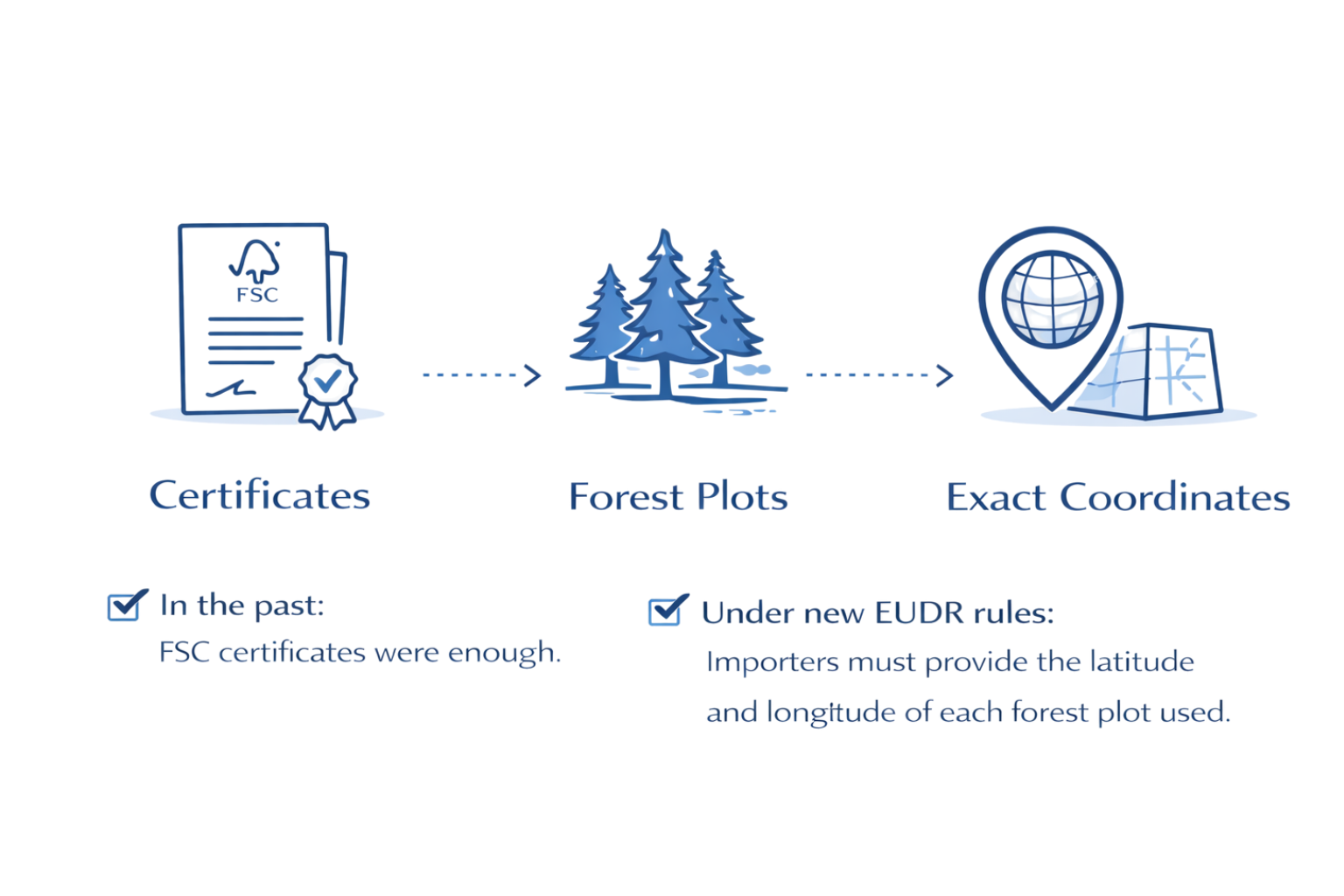
The biggest shift under EUDR is the move away from broad certifications toward exact geolocation.
In the past, an FSC logo was considered sufficient proof of responsible sourcing. Under the new rules, it isn’t. Importers must provide the latitude and longitude of every forest plot where the wood was harvested to make the paper pulp.
If one production run uses pulp from multiple forests, all of those locations must be documented. Without this data, a Due Diligence Statement cannot be submitted in the EU’s TRACES system, and without that statement, goods do not clear customs.
The Recycled Paper Exception (and Its Catch)
There is one important exemption: 100% recycled paper.
If packaging is made entirely from post-consumer recycled material, it falls outside the scope of the EUDR. This makes fully recycled boxes the lowest-risk option going into 2026.
However, mixed materials are where many brands get caught. A box that is 80% recycled and 20% virgin pulp is still subject to full traceability requirements, and that remaining 20% must be mapped back to the forest level.
In practice, this means brands must either:
- Move entirely to certified 100% recycled packaging, or
- Ensure their printers and pulp suppliers are already collecting and sharing GPS-level sourcing data
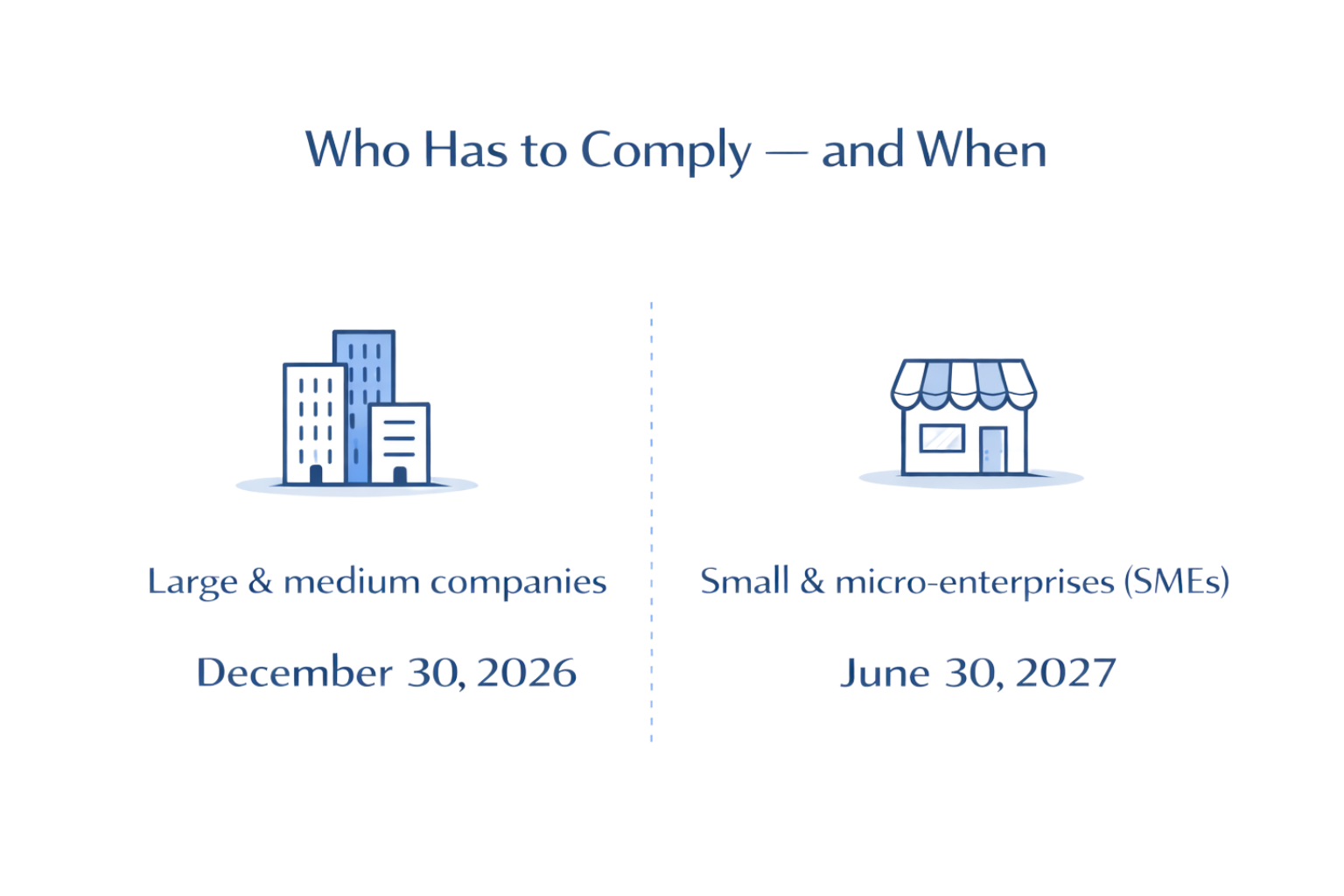
Who Has to Comply — and When
EUDR deadlines depend on company size:
- Large & medium companies: December 30, 2026
- Small & micro-enterprises (SMEs): June 30, 2027
However, SMEs shouldn’t assume they are safe. Large retailers, department stores, beauty chains, and online platforms, will begin demanding compliance from suppliers well before the deadline to protect their own inventory. For many brands, that pressure will start in mid-2026.
What Happens If You Ignore It
The penalties are designed to hurt. Non-compliance can result in:
- Fines of up to 4% of the total annual EU turnover
- Confiscation of goods and related revenues
- Temporary exclusion from EU public procurement and funding
But the most immediate risk is operational: blocked shipments, missed launches, and unsellable stock stuck at the border.
Why Timing Matters More Than You Think
Sea freight timelines make this especially dangerous. A shipment leaving Asia in October 2026 may not reach EU customs until December. If it arrives without a valid Due Diligence Reference Number, it may never enter the market at all. For many brands, that could mean losing an entire production.
The Smart Move for 2026
The most practical first step is an audit of HS Code 48 materials across all SKUs. Brands should already be asking packaging suppliers:
- Which wood species are used in the pulp
- Whether geolocation data is available at the forest-plot level
- Whether fully recycled alternatives are feasible


Berlin Office : Dunckerstr 83. 10437 Berlin
Warehouse: Alexander-meißner str 77B 12526 Berlin


