

2026 Is the Year of Mandatory QR Codes & Digital Product Passports
K-beauty has always been about storytelling — beautiful packaging, ingredient heritage, and carefully built routines. What’s changing in 2026 isn’t that story itself, but how it has to be told.
From August 12, 2026, products sold in the EU will need to carry a Digital Product Passport (DPP) under new EU regulations (ESPR and PPWR). In simple terms: every product will need a digital version of itself, accessible via a QR code on the packaging. This isn’t a design trend or a marketing feature. It’s becoming a requirement for selling in Europe.
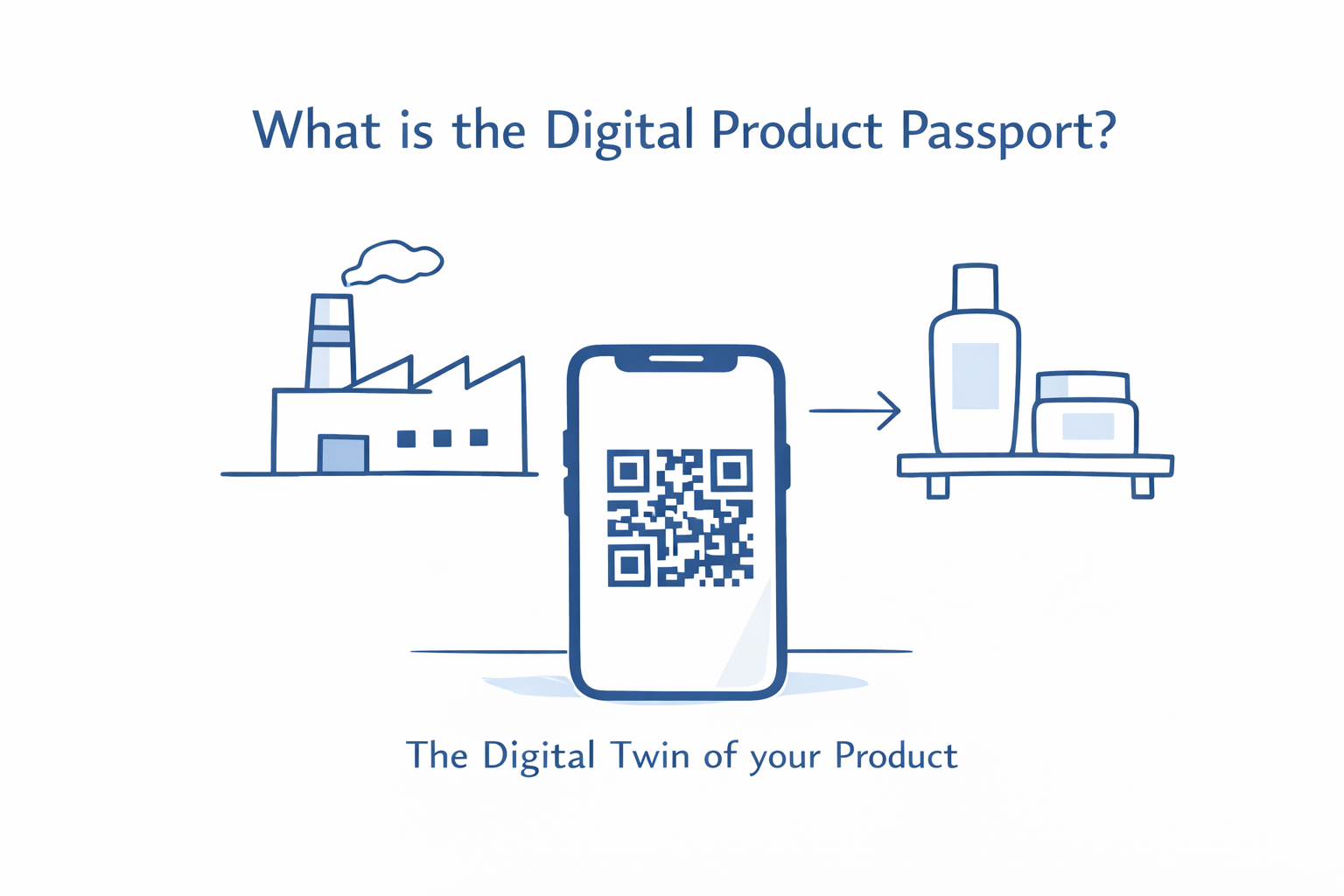
What exactly is the Digital Product Passport?
Think of the DPP as a "Digital Twin" of your physical product. It is a verified, scannable record that follows the product from the manufacturing plant in Incheon to a bathroom shelf in Berlin.
Accessible via a QR code, the DPP provides instant transparency for consumers, retailers, and waste management facilities. It will eventually store:
- Material Fingerprints: A granular breakdown of packaging materials and the presence of "substances of concern" (like PFAS or certain microplastics).
- Supply Chain Milestones: Verified data on carbon footprint and the ethical sourcing of hero ingredients like Centella or Ginseng.
- Circular Instructions: Real-time, localized recycling guidance that updates based on where the consumer is scanning the code.
The Shift from "Marketing Claims" to "Structured Data"
For years, K-beauty has thrived on evocative storytelling. We talk about "fermented minerals," "Jeju volcanic clay," or "eco-friendly glass." In 2026, the EU will require more than just a claim—they will require evidence.
Most K-beauty brands rely on OEM/ODM partners (like Kolmar, Cosmax, or smaller specialist labs). Historically, technical data, like the exact percentage of recycled content in a plastic tube, often stayed inside the factory. With the DPP, that data must be "structured" (digital-ready) and shareable.
If your manufacturer provides data in a static PDF, you may have a compliance problem. By 2026, you will need that data in a format that can feed directly into the EU’s central registry.
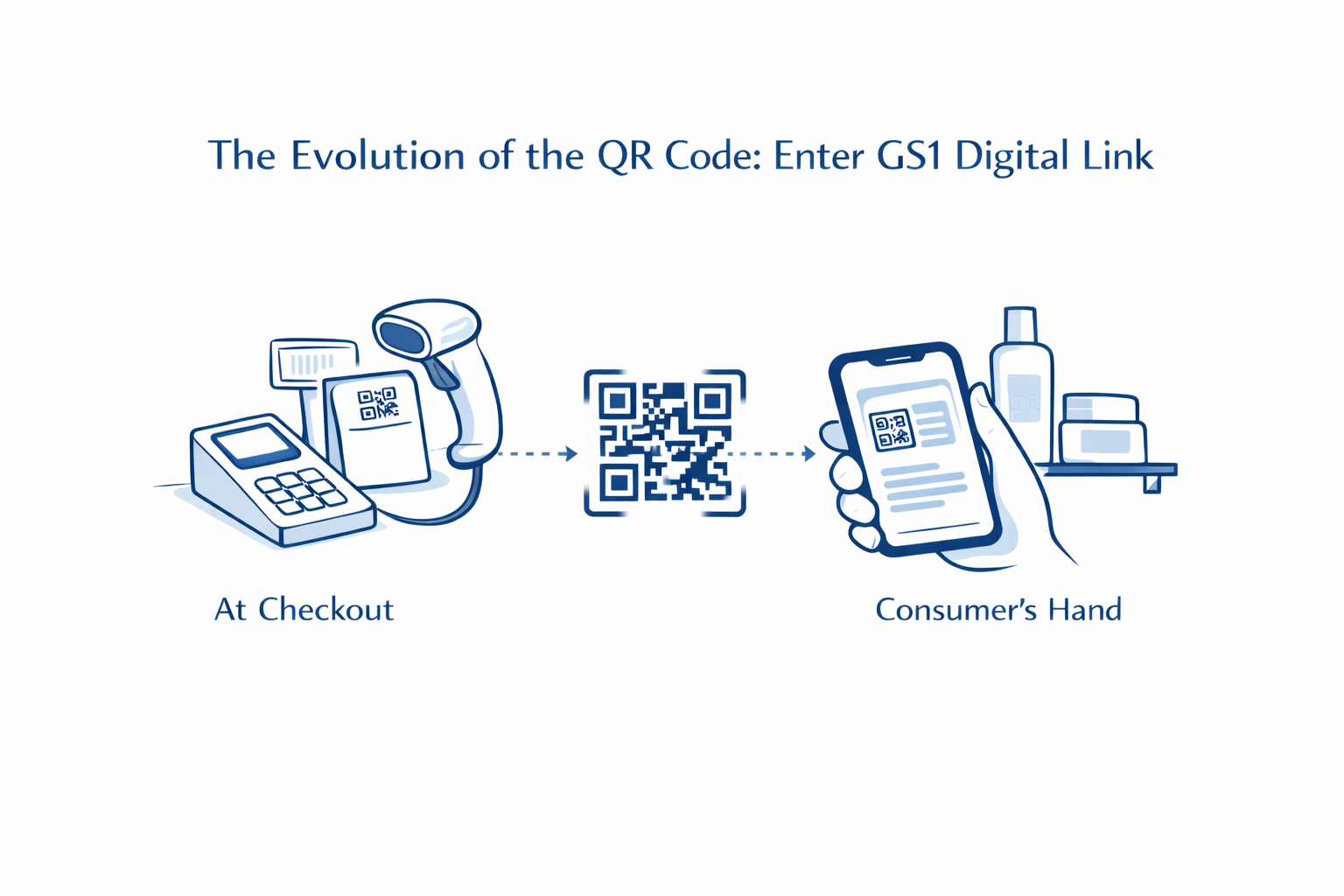
The Evolution of the QR Code: Enter GS1 Digital Link
The QR codes we see today are often "dumb" links, they simply send a user to a website. The 2026 future belongs to the GS1 Digital Link.
This is a single, standardized QR code that performs two roles at once:
- At Checkout: It acts as the retail barcode (replacing the traditional vertical lines).
- In the Consumer’s Hand: It opens the Digital Product Passport, automatically displaying content in the user's local language.
For K-beauty brands, this is actually a massive logistical win. Instead of printing 27 different boxes for 27 EU member states to comply with local sorting laws (like France's Triman logo), one "smart" QR code can handle the localization digitally.
Protecting the K-Beauty Aesthetic
The biggest concern for design teams is often: "Will a clunky QR code ruin my minimalist packaging?" The regulations are strict—the code must be permanent, scannable, and at least 10 × 10 mm.
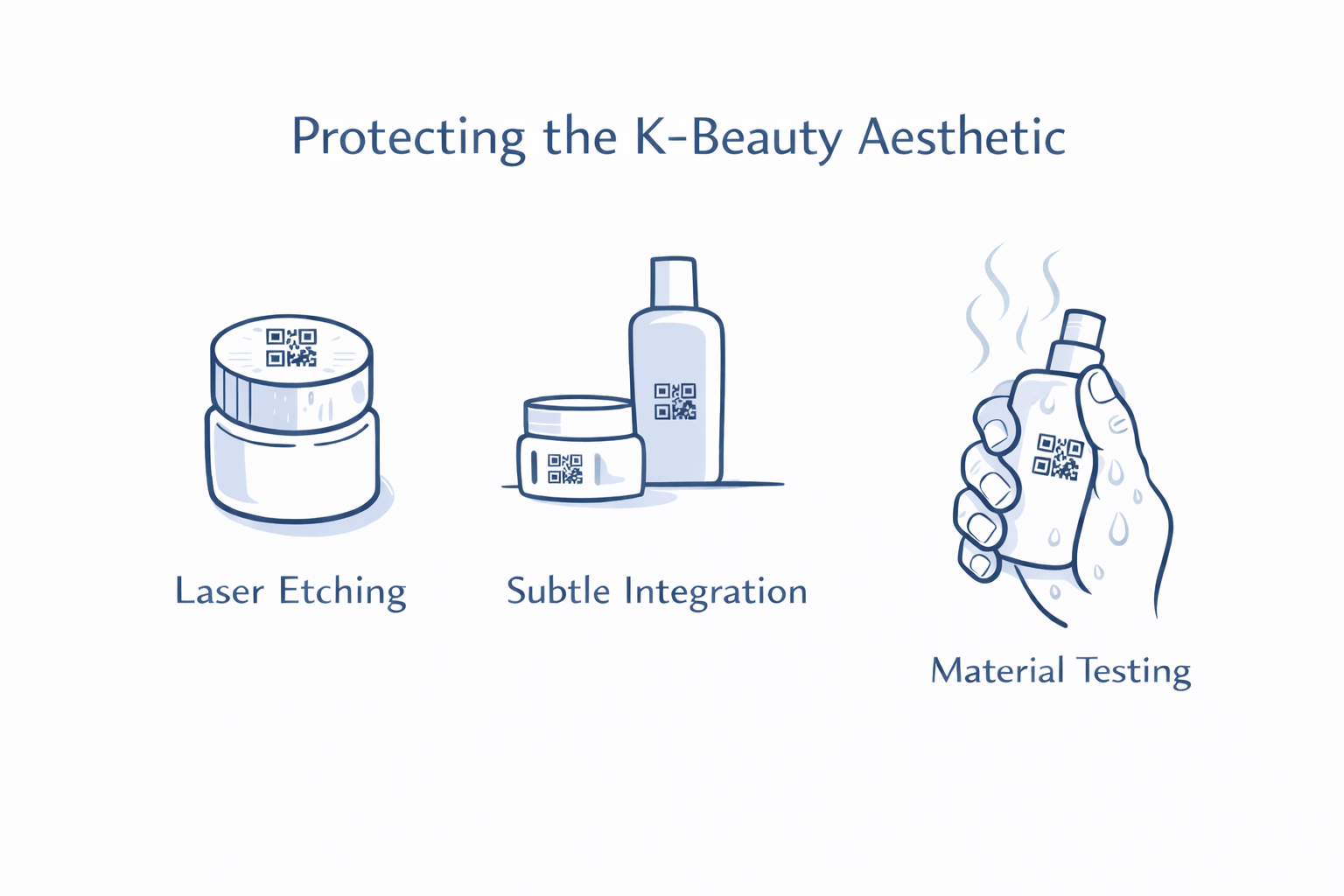
However, "compliance by design" is allowing brands to innovate:
- Laser Etching: Brands are experimenting with etching codes directly onto glass or wood caps for a premium, permanent feel.
- Subtle Integration: 2D barcodes (DataMatrix) are being integrated into the "fine print" areas of labels, maintaining the clean aesthetic of the primary branding.
- Material Testing: K-beauty brands are already testing how codes survive "bathroom life"—ensuring they remain scannable even after being handled by oil-covered fingers or sitting in steam.
Why you should start preparing now
European retailers are already asking brands if they are “DPP-ready” for 2026 and 2027 listings. If your data isn’t prepared, products can face:
- delays at customs
- relisting costs
- or being blocked from sale
Preparation doesn’t mean redesigning everything tomorrow — but it does mean:
- asking manufacturers for structured data (not just PDFs)
- reviewing packaging sizes and surfaces
- understanding where your data currently lives


Berlin Office : Dunckerstr 83. 10437 Berlin
Warehouse: Alexander-meißner str 77B 12526 Berlin


