
Microplastic Phase-Out 2026: The Transformation of K-Beauty
K-Beauty’s global dominance wasn’t built solely on ingredients. The "glass skin" glow, the weightless SPF, and the instant-blur primer all rely on sophisticated textures. However, the very synthetic polymers that make these products feel like a second skin are now under the regulatory microscope.
In 2026, the European Union’s restriction on intentionally added microplastics (Regulation EU 2023/2055) moves from a theoretical framework into a hard enforcement reality.
The 2026 Deadline: Reporting vs. Restricting
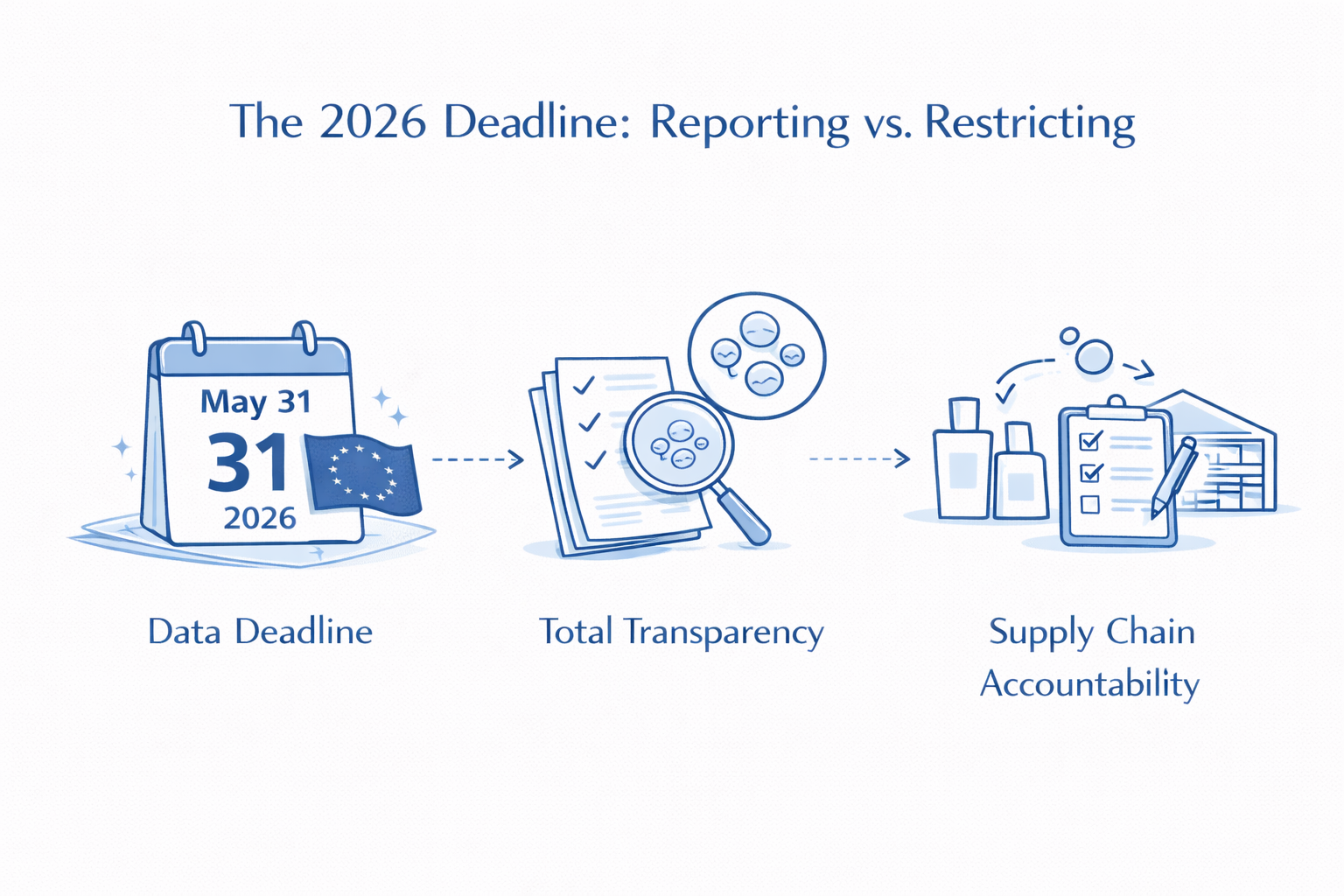
While the total ban on certain product categories rolls out over several years, the immediate pressure point is May 31, 2026. This marks the "Data Deadline." From this date, any brand placing products on the EU market must provide rigorous documentation for Synthetic Polymer Microparticles (SPMs).
- Total Transparency: Brands must identify every polymer used, its concentration, and its technical function.
- The Burden of Proof: If a polymer is claimed to be "biodegradable" or "natural," the brand must provide standardized evidence (such as OECD 301 tests).
- Supply Chain Accountability: Many K-Beauty brands operate as "white labels" or through OEMs (Original Equipment Manufacturers). If the manufacturer hasn’t done the paperwork, the brand cannot sell the stock.
Why the "K-Texture" is at Risk
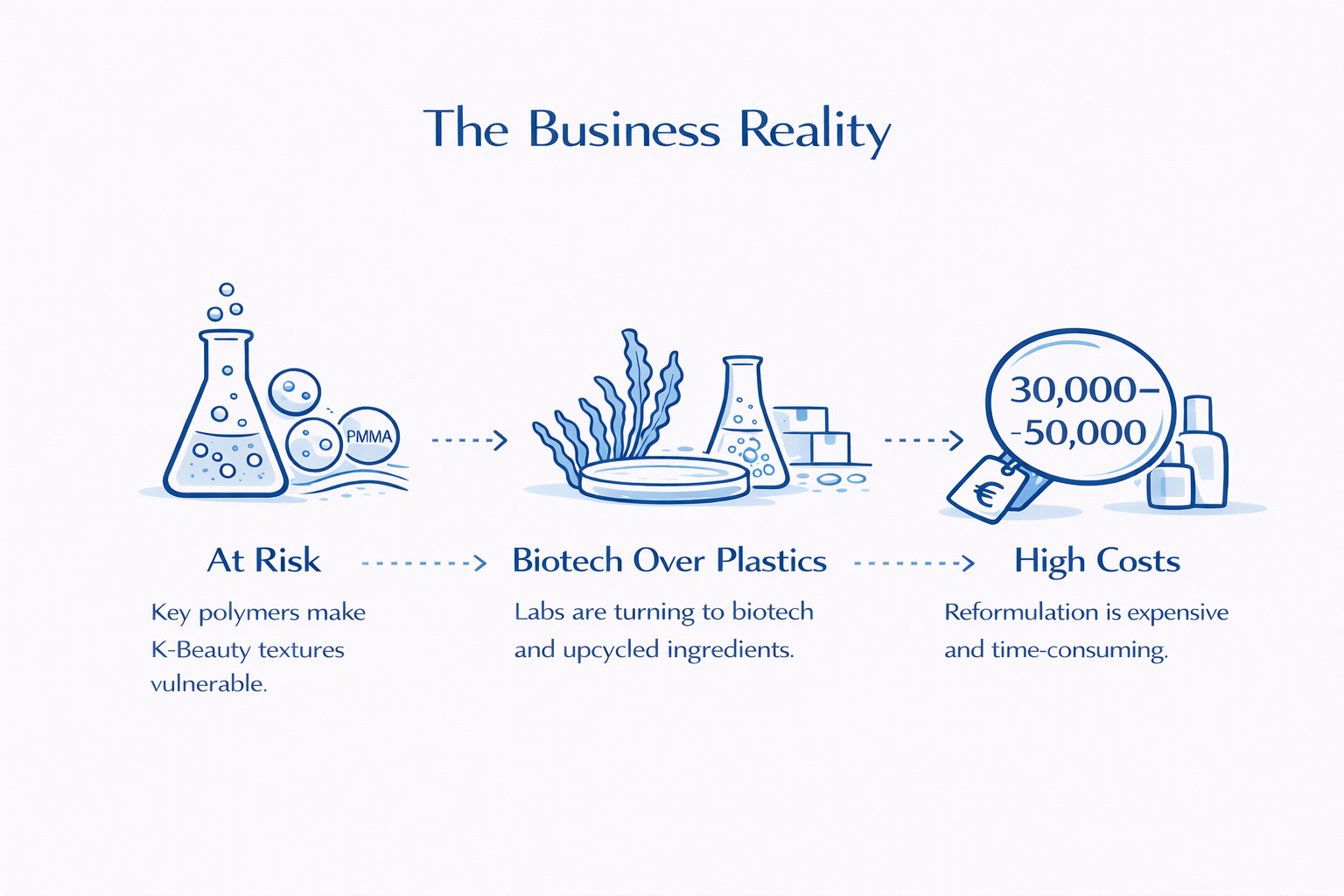
The K-Beauty "holy trinity" (cushions, sunscreens, and primers) is uniquely vulnerable because it relies on specific polymers for performance.
- Optical Blurring: Ingredients like Nylon-12 and PMMA (Polymethyl Methacrylate) act as tiny ball bearings that roll over the skin, filling fine lines and scattering light.
- Sunscreen Stability: High-SPF Korean sunscreens are famous for not being greasy. This is often achieved via Acrylates/C10-30 Alkyl Acrylate Crosspolymers, which suspend UV filters in a breathable, non-sticky matrix.
- Encapsulation: Premium serums often use plastic-based micro-capsules to protect volatile ingredients like Vitamin C or Retinol. These are directly targeted for a phase-out by 2029, meaning R&D teams must find alternatives now to avoid a double reformulation in three years.
Biotech Over Plastics
Korean labs are not simply reverting to heavy plant oils or waxes, which would destroy the lightweight "K-feel." Instead, they are leaning into White Biotechnology.
- Polysaccharide Engineering: Labs are using fermented seaweed and mushroom extracts to create "bio-films" that mimic the slip and slide of silicones and plastics.
- Upcycled Silica & Rice: Micronized rice husks and corn-derived esters are being engineered into spherical shapes to replace plastic microspheres, providing the same "soft-focus" effect without the environmental persistence.
- Exosome Delivery: Rather than plastic shells, brands are experimenting with exosomes, tiny, cell-derived vesicles, to deliver active ingredients deep into the skin.
The Business Reality
Reformulating a hero product is an expensive, high-stakes gamble. A single change in a stabilizer can cause a sunscreen to separate after six months or change the color of a foundation.
- Cost & Time: A full reformulation involves stability testing (typically 6–12 months), microbial challenge tests, and new safety assessments. The price tag for a single SKU can easily exceed €30,000–€50,000.
- The "Great Thinning": Major conglomerates like Amorepacific and LG H&H have the capital to overhaul their entire catalogs. Smaller K-Beauty brands that rely on rapid, low-cost manufacturing may find themselves priced out of the European market entirely.
Bottom Line
The 2026 microplastic regulations are forcing K-Beauty to outgrow its reliance on cheap, high-performance synthetics. While the consumer might not notice a difference in the jar, the chemistry behind it is becoming more expensive and more complex. This is a technical evolution that will separate the world-class innovators from the trend-chasers.


Berlin Office : Dunckerstr 83. 10437 Berlin
Warehouse: Alexander-meißner str 77B 12526 Berlin


